Where I started
I didn’t know I was unwanted when I was little. I only knew how people responded to me. I knew that needing something usually came with irritation, dismissal, or some reminder that I was asking for too much. I knew my mother could be right beside me and still feel far away. I knew my father’s mood could change the whole house. I knew my twin’s feelings were handled differently than mine. I did not have words for any of that yet, but I was already learning my place in the family.
I don’t remember childhood as one clean story. I remember pieces. Some are clear because they happened so many times that they became normal. Some are clear because my body kept them even when my mind tried to move on. Some are clear because I have looked back at them as an adult and realized how early the pattern started.
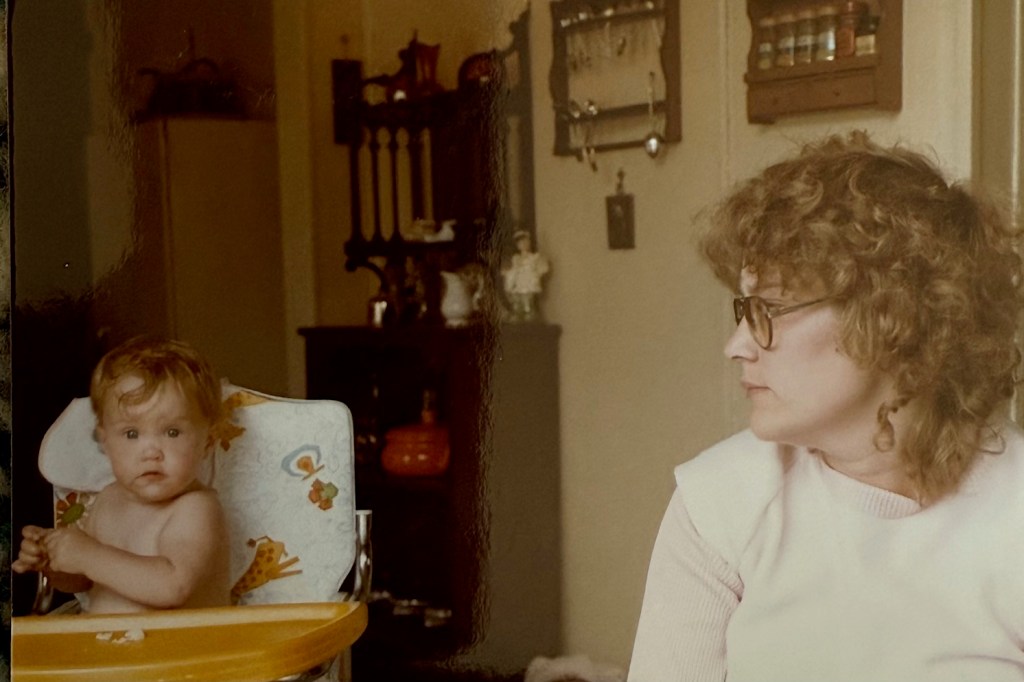
There is a photo of me as a baby. I am sitting in a high chair, small and exposed, looking out at the world. My mother is beside me. Her body is there, but when I look at that photo now, I do not feel comfort from it. I see distance. I see the beginning of something I would spend years trying to understand.
I know people can look at one photo and say it is just a moment. They are not wrong. A photo is only one moment. But sometimes one moment fits a pattern so clearly that it becomes hard to ignore. The photo matches what I remember feeling in the house. People were close, but not always available. They were present, but not always reachable. They could be in the same room and still leave me alone in the ways that mattered.
That was one of the first things I learned. Someone can be near you and still not be with you.
My needs were treated like problems. Not always in big ways. Sometimes it was small and direct, like asking for water and being told to suck my own spit. That sentence stayed with me because it said more than it looked like it said. It said do not need. It said handle yourself. It said your discomfort is not important here.
A child does not hear one sentence and build a whole life around it. It was not just one sentence. It was the repetition. It was the way the same message came through again and again until I stopped expecting a different answer. I learned to stop asking unless I had already measured the cost.
I learned to watch first. I learned to check the room before I spoke.
I learned to understand people by what they did, not by what they said. That is not how a child should have to learn the world. But it is how I learned mine.
The house other people saw
From the outside, my family had the right shape. Military father. Mother who ran a daycare on base. Three daughters. Structure. Rules. A family that could look stable if you were not standing inside it.
My mother knew how to be warm in public. She cared for other people’s children. Parents trusted her. People saw someone capable, kind, and dependable. That part matters because it was not that she did not know how to give warmth. She knew. I watched her do it. I watched other children receive a version of her that did not feel available to me.
That teaches a child something very specific. It teaches you that care exists, but it is not for you in the same way. It teaches you that the person is capable of being different, which makes the difference feel personal.
At home, with me, her warmth was not something I could count on. If I brought her something that mattered to me, it could be dismissed or ignored. If I was hurt, I could be told I was too sensitive. If I reacted, I was dramatic. If I needed something, I was inconvenient. If I noticed something was wrong, I became the problem for noticing it.
Her control was not always loud. Sometimes it was silence. Sometimes it was withdrawal. Sometimes it was the way she could make me feel like I had done something wrong without saying exactly what it was. Sometimes it was the way she let the rest of the house happen around me and expected me to absorb it.
My father had his own public image. His military career gave him the appearance of discipline and authority. People often trust a uniform. They assume structure means safety. They assume a person who can function in public is functioning the same way at home.
That was not true in my house.
There was structure, but not safety. There were rules, but not fairness. There was control, but not care. There was a public version and a private version, and the public version did not protect me from the private one.
The private version was where I learned that adults could create the harm and also define the story around it. They could decide what counted as discipline, what counted as being dramatic, what counted as disrespect, what counted as normal. I was a child inside a system where the adults controlled both the behavior and the explanation of the behavior.
That is a hard place to grow up. It makes you question yourself because the people around you keep giving names to things that do not match what your body knows is happening.
I did not have the power to argue with the system then. I had to survive it.
The role I was given
I was the oldest daughter, and I was a mirror twin. That already made my place in the family complicated, but the real issue was not just birth order or being a twin. It was the role I was given.
My twin was treated as the emotional one. The sensitive one. The one whose feelings needed attention. Somehow, that meant I became responsible for managing her. If she cried, I had to fix it. If we fought, I had to apologize. If she was upset, the room turned toward me like I had caused the weather.
No one sat me down and explained it. Families do not always announce roles. They repeat them until everyone knows where to stand.
I learned who got comfort, who got believed, who got protected, and who was expected to understand.
That does something to a child. It teaches you to leave yourself quickly. It teaches you to move toward whoever is upset and figure out what they need before you even know what you feel. It teaches you that peace means everyone else is settled, even if you are not. My emotions did not receive the same care. They were treated like interruptions. If I was hurt, I was too sensitive. If I was angry, I was the problem. If I noticed the unfairness, I was supposed to swallow it and keep moving.
One trip to Italy showed that pattern clearly. We were in Lake Como. The first night, my twin took the comforter, and I was left with a sheet. I was cold. The next morning, I saw that my mother had an extra blanket and asked if I could use it the next night. She said no because she might need it. Keep in mind, I paid for this trip.
I accepted that because I had been told no.
Then my twin came out of the bathroom and asked for the same blanket because she had been cold. My mother gave it to her right away.
That moment was not about a blanket. It was about position. It was about the same need receiving two different answers depending on who asked. It was about me seeing the rule change in front of me and knowing I was expected to pretend I did not see it.
People can call things small when they do not have to live inside the pattern. But repeated small moments are how a system teaches you your place. The blanket mattered because it was not the only blanket. It was one more example of the same rule.
My place was to need less. My place was to make less trouble. My place was to take the answer and keep going. That followed me for a long time. I became good at adjusting. I became good at reading what other people needed. I became good at taking responsibility for things that were never mine. That skill helped me survive, but it also cost me. It made it harder to know where I ended and everyone else’s needs began.
My father and the wall
My father was violent.
I am going to say that plainly because I am not interested in using softer words for something that was not soft.
He was not just strict. Strict can still include fairness. Strict can still recognize a child as a child. What he did was different.
His anger was loud, explosive, and focused on me. My sisters did not experience him the way I did. That matters because unequal treatment changes how a child understands herself. When the worst is aimed at you and not everyone else, you start looking for the reason inside yourself.
You wonder what you did. You wonder what is wrong with you. You wonder why you are the one who gets the punishment, the inspection, the force, the anger.
I know now that a child should never have to make sense of an adult’s violence. But a child will try. A child has to. The adults are the whole world at first. If the adult is unsafe, the child still has to find a way to live in that world.
He kicked me. He hit me. He inspected my room like I was under military review instead of a child living in my own home. White-glove checks. Dust. Towels. Small things turned into proof that I had failed.
If I left a towel on the floor after a bath, he did not just correct me. He kicked me as hard as he could. That was not teaching. That was not parenting. That was pain being used as control.
Then there was the wall.
He made me stand with my nose to the wall for hours.
I want that written clearly because it is easy for people to make abuse sound smaller when it is described too gently. This was a child standing with her nose to the wall for hours while an adult had power over whether she could move, shift, rest, or be done.
He would sit and watch television while it happened. He acted like he was not watching me, but he was. He waited for me to move. That part is chilling to me. The room looked normal around the harm. The television was on. A grown man could sit there while a child stood in pain and humiliation, and the performance of normal life continued.
That was torture.
It was not discipline.
Discipline is supposed to teach. That trained me.
It trained my body to freeze. It trained my legs to lock. It trained my breath to stay small. It trained me to stay aware of everything while pretending I was not reacting. It trained me to know that suffering could happen in plain sight while the adult responsible acted casual. That is a specific kind of damage. It makes reality feel unstable. The child knows what is happening is wrong, but the adult behaves like it is ordinary. The house keeps moving. The television keeps playing. The person with power pretends nothing extreme is happening.
That is how a child learns to distrust the room. Not just the person. The room. Because the room can look normal and still not be safe.
There were other punishments too. Being made to lie face-down across an adult’s lap. Being hit with a hand or a wooden spoon. Being told not to protect my own body. That crosses a line people do not always want to name. It is not just pain. It is exposure, helplessness, and forced submission. It teaches a child that her body does not belong to her.
My body learned that before I had language for it. My mind spent years trying to understand it later.
What stayed in my body
For a long time, I thought of what happened as memories. Then I started understanding it as body memory too.
That changed everything. Standing with my nose to the wall for hours was not just something that happened and ended when I was allowed to move. My body learned from it. It learned positions. It learned rules. It learned what to do when movement was not allowed and pain had to be endured quietly. Locked knees. Tight hips. A hinge in the middle of my back. Shallow breathing. Tension in my neck, jaw, shoulders, legs, and feet.
A body always preparing before anything happened. I did not connect all of that right away. I had lived in the patterns for so long that they felt like me. I stood the way I stood. I held myself the way I held myself. I carried tension like it was part of the design.
But the more I looked at it, the more I could see the old rules still running. Do not move. Do not react. Do not make it worse. Do not draw attention. Do not need relief.
A child forced into stillness learns that stillness can be danger, not rest. It means calm does not always feel calm later. Quiet does not always feel safe. Being watched does not feel neutral. Standing can become bracing. Sleeping can become restless. The body keeps checking for the wall even when the wall is gone.
I noticed things in my sleep too. Touching my nose. Moving in ways that seemed small until I understood what my body might be repeating. The body remembers positions. It remembers what once meant survival. It can keep running old safety checks long after the original danger has passed.
That does not mean I am broken. It means my body was loyal to what it learned. It protected me the way it knew how.
I see that now in my pain. Foot pain. Back pain. Neck pain. Tight calves. Tight ankles. Tight knees. Tight thighs. Tight glutes. A body shaped by years of bracing and adjusting. Hypermobility adds another layer because the body works harder to stabilize itself. Survival added even more work on top of that.
Sometimes people separate the body from the story. I cannot do that anymore. My body is part of the record. It has kept information my mind could not always hold at once.
The wall is not just a memory. It is in how I learned to stand. It is in how hard it has been to rest. It is in how quickly I read a room. It is in the difference between peace and the waiting for peace to be interrupted. Learning this has not made everything easy, but it has made things clearer. It gave me a way to stop blaming myself for patterns that started as survival. It helped me understand that some of what I thought was personality was actually protection.
Now I am learning different rules. My knees can bend. My breath can move. My body can take up space. Stillness does not have to mean punishment. Being seen does not have to mean danger.
Autism, ADHD, and being misunderstood
I did not know I was autistic when I was a child. No one around me knew either, or if they did see something different, they did not understand it in a way that helped me.
I just knew I noticed everything. I noticed tone. I noticed body language. I noticed changes in mood. I noticed the difference between what people said and what they meant. I noticed when the story did not match the behavior. I noticed public warmth and private coldness. I noticed rules changing depending on who was asking.
That kind of noticing did not make childhood easier. It made it louder.
I did not have a filter for the patterns. I could feel them and see them, but I was still a child. I did not have the power to name them in a way anyone would accept. When I reacted, my reaction became the issue. People did not ask what I was reacting to.
That is a common problem when a child sees too much in a family that depends on denial. The child becomes inconvenient. Not because she is wrong, but because she is noticing what everyone else is trying to keep hidden.
I was labeled in ways that made my perception sound like a flaw. Too sensitive. Dramatic. Difficult. Too much. I heard different versions of that throughout my life. The words changed, but the pattern was the same. People were reacting to the fact that I saw more than they wanted me to see.
ADHD was part of it too. Hyperfocus. A mind that could move fast and connect pieces. A nervous system that had been trained by danger and a brain that already worked with intensity. Hypervigilance can be mistaken for personality when it has been there long enough. So can masking. I masked for decades without knowing that was what I was doing.
I learned how to become what the situation required. I learned how to read what would be accepted and adjust myself around it. I learned how to perform being fine. I learned how to appear capable even when my system was overloaded.
That helped me survive, but it made it harder to know myself without the performance.
Late-discovered autism changed the way I looked at my life. It did not erase what happened. It did not excuse anyone. It gave me context for myself. It helped me understand why I experienced things so deeply, why patterns stood out, why environments could exhaust me, why I needed recovery time, why the world often felt like it was coming in with the volume turned up.
It also helped me see that my mind was not the problem.
My mind was trying to make sense of a life that did not make sense. It had been doing that from the beginning.
Being useful
I became useful because useful was safer than needy. That is one of the clearest ways I can explain what happened to me.
Useful children learn quickly. They learn where things are. They learn who needs what. They learn what mood everyone is in before anyone asks. They learn what to say, what not to say, and when to disappear into the background.
Useful children become good at carrying.
They carry emotions. They carry responsibility. They carry blame. They carry silence. They carry the parts of a family no one else wants to hold.
For a long time, I did not see that as a role. I thought it was just who I was. I was independent. I was capable. I was strong. I could figure things out. I could handle pressure. I could take care of things. All of that was true, but it was not the whole truth.
Some of that was built from having no other option.
If you grow up in a house where your needs are treated as inconvenient, you learn to meet them yourself or stop noticing them. If you are expected to manage other people’s emotions, you learn to move toward their feelings before your own. If the adults are unpredictable, you learn to predict them. If comfort is not reliable, you become your own system of survival.
That can look impressive from the outside.
Inside, it is exhausting!
I became the person who could make sense of chaos. I could read a room. I could find the weak point in a system. I could see what needed to happen before anyone had language for the problem. Those skills became part of my life in real ways. They helped me in the military. They helped me in security. They helped me in work. They helped me protect people and build structures.
But I also had to learn that being useful is not the same as being loved.
That was a hard lesson because usefulness had been tied to safety for so long. If I was useful, I had a place. If I was useful, people kept me around. If I was useful, maybe I would be treated better. If I was useful, maybe I would not be discarded.
That belief followed me into relationships, work, family, and every place where people benefited from my ability to hold things together.
The hard part was not becoming capable. The hard part was learning I was allowed to exist when I was not carrying something for someone else.
My father after childhood
My father did not become simple just because I grew up.
For years, I tried to make sense of him through the pieces that looked like connection. We talked on the phone. I called it Dad Talk. Sometimes the conversations were good. Sometimes he could make me feel like I mattered. I held onto that because a child can grow into an adult and still want a father.
I wanted to believe there was something there. But connection that depended on me doing all the work and that is not the same as being chosen.
When I was a senior high school and lived with him, he gave my room away to a woman and her child for months without telling me. My room. My bed. My things. The place that was supposed to be mine was treated like it could be handed over because I was not important enough to ask. When I questioned it, the answer was basically that I was never home anyway.
That said a lot. It told me my place was conditional. It told me I could be displaced and then made to feel unreasonable for noticing.
When I left for the Air Force, he did not take me to MEPs in Phoenix. My recruiter did what my father should have done. I sat on a bus alone and left for a new life without the goodbye a daughter should have been able to expect from her father.
He did show up for my basic training graduation. I held onto that for a long time. I wanted it to mean something bigger. I wanted it to be proof that he cared, that he could show up, that maybe there was a version of him I could still have.
Later, I had to understand that showing up once is not the same as being there.
There were years where I thought we were close because we talked. Then I started seeing what happened when I was not the one maintaining the connection. I saw what happened when I made choices he did not like. I saw how quickly love could come with conditions.
When I married someone he did not approve of, he cut me off. He acted like my life was a personal attack on him. It made me feel like his love had fine print I had failed to read.
The pattern with my twin stayed too. He showed up for her in ways he did not show up for me. He took her calls. He laughed with her. He defended her. When there was an issue with her phone bill, he called me to yell, not to understand. He told me to turn her phone back on or we were done. That was the choice he gave me. My self-respect or my father.
There were years of silence after that.
Then he came back like time itself had cleaned the room. Like nothing needed to be named. Like I was supposed to step over everything and act normal because he was ready to act normal.
I did that for a while. I let myself believe again.
I even looked for a home with him in mind. He had conditions. West of the Mississippi. Near a VA. A shop. I listened. I included him in the picture. I let myself imagine that maybe he actually wanted to be part of my life.
But eventually the pattern showed itself again. He was not moving toward me. He was waiting until he needed something.
The last call made that clear. He was sitting in his truck, miserable, and it felt like he was waiting for me to ask the right question so he could unload. He skipped over my life, what I had built, what I was handling, and went straight to why I was not answering my twin’s calls.
Then he accused me of not caring if he lived or died.
That is a heavy thing to put on someone. It is even heavier when it comes from a parent who spent years not carrying you.
I had offered solutions. I had tried. I had waited. I had made room for the idea of him. But when I finally said no, I became the villain.
That is how these systems work. They assign you responsibility, then punish you when you stop accepting it.
I forgive him, but I do not excuse him. I forgive him because I am not carrying the weight anymore. I am not waiting for him to become the father I needed. I am not waiting for him to see me before I allow myself to move forward.
Leaving and becoming
Leaving home did not instantly make me free. It gave me distance, and distance matters, but the body and mind do not drop everything at the door just because the location changes.
When I joined the Air Force, I stepped into another system. In some ways, the military made sense to me. Security Forces required observation, structure, threat awareness, control points, rules, responsibility, and fast adjustment. I had been learning some version of that my whole life.
That does not mean my childhood prepared me in a healthy way. It means survival skills can become useful in places that reward them.
I became good at pressure. I became good at reading people. I became good at seeing what could go wrong before it happened. I became good at operating inside structures most people found intense.
I was young, and I carried responsibility. I worked in areas where protection mattered. I dealt with access, dispatch, investigations, training, quality control, Anti-Terrorism, Force Protection, and secure environments. I learned systems from the inside. Being a woman in Security Forces added another layer. I was in male-dominated spaces where competence had to be proven repeatedly. I had to carry myself in a way that kept me taken seriously without making myself smaller. I had to learn when to speak, how to move, how to hold my place, and how to keep doing the work even when the room was not built for me.
The military gave me awards and recognition. It also gave me more pressure. Both can be true.
Deployments took that same skill set and put it in places where adapting was not optional. Qatar, Saudi, Jordan, Uzbekistan, Afghanistan, and Iraq were not just names on a service record. They were environments I had to live inside, read quickly, and function through while I was still young and carrying more responsibility than most people saw.
My first time in Qatar stayed with me because the threat was not theoretical. The sirens went off. Mortar attacks and incoming missiles turned the environment into something immediate. There are moments when your body understands you may die before your mind has time to organize the thought. That was one of those moments.
I did not process that as a story at the time. I processed it as the job. Move. Respond. Get to cover. Keep functioning. Later, the memory has more room to show itself for what it was.
Other days were less sudden but still wearing: poor sanitation, scorpions, heat, exhaustion, limited privacy, and trying to function in environments that were clearly not designed with women in mind. The hard parts were not always dramatic from the outside. Sometimes they were practical, constant, and grinding in a way that stayed with me long after the deployment ended.
K2 stayed with me in its own way. At the time, I did not fully understand what we were standing in. I remember the Soviet base and the blue-neon look of the soil, the kind of detail that stays in your mind because it does not feel normal even before anyone explains why. Years later, when exposure concerns and the PACT Act gave language to what had been there, it felt strange to realize my body may have been carrying more than I knew. Sometimes you live through something before the paperwork knows how to name it.
The C-130 smoke event lives in that same category for me. I remember the oxygen masks, the combat landing, and running off the aircraft. In moments like that, the body acts first. The mind catches up later, once the immediate danger has passed and there is finally room to understand what happened.
A lot of my leadership came from that kind of pressure, not comfort. I found out I could function in hard places, but that does not mean the hard places left nothing behind. I also saw how often systems depend on people who are carrying more than anyone sees.
The military was not separate from my childhood in the way people might think. It was another environment where my pattern recognition had a place to go. It was another system I learned to read. It was another place where I was responsible for protection while still needing protection myself.
That pattern followed me into relationships, but not in a straight line. It showed up in what I tolerated, what I explained away, what I tried to repair, and how long it took to recognize when something was asking me to disappear again.
Relationships, harm, and rebuilding
My childhood shaped the way I understood relationships before I ever had the chance to choose them with a clear mind.
When love, fear, control, and survival get tangled early, it takes time to separate them later. It takes time to know the difference between connection and intensity, between care and control, between being wanted and being needed for what you provide.
I lived through domestic violence. I am not going to turn that into a side note. Being harmed inside a relationship that should have been safe changes trust. It changes the body. It changes what home means. It makes you rebuild not only your life, but your sense of what safety is allowed to feel like.
Leaving, rebuilding, and reclaiming yourself after intimate harm is not one decision. It is a series of decisions. Some are practical. Some are emotional. Some happen in your body before you can explain them.
My divorce changed the future-shape. It ended a version of life I thought I was building. It made me separate who I was from a relationship structure. That is not simple, even when leaving is right. You still have to grieve the idea of what you thought something was going to become.
I have had to learn what love is not.
Love is not control.
Love is not fear.
Love is not being useful enough to keep someone kind.
Love is not carrying a person who will not carry themselves.
Love is not abandoning myself to keep the peace.
I have also had to learn what I actually want. Not what I was trained to accept. Not what looks good from the outside. Not what people expect a woman to want by a certain age. I do not want a life built around pressure, performance, or someone else’s timeline.
I want connection that adds to my life and brings its own good energy with it. I want ease without losing independence. I want honesty without control. I want someone who can stand beside me without needing to take from what I have built.
That may not fit what other people expect. That is fine.
I spent too much of my life living inside roles other people assigned. I am not interested in building my future out of another set of expectations that does not belong to me.
Kelly, Masyn, and family after loss
My sister Kelly died in 2017.
There is no simple way to write that. Loss does not fit neatly into a timeline. It moves through everything. It changes family dynamics. It changes memory. It changes the way certain dates feel. It changes what you thought the future would hold.
When someone dies, the grief is not the only thing that arrives. Family systems arrive too. Old roles get activated. Old patterns show up in new clothes. People handle pain in the ways they already know how to handle pain, and sometimes that means the same person ends up carrying more than they should.
Masyn was affected by the family instability too. Protecting him became another place where I saw responsibility fall where it should not have fallen. There were money issues. There was a GoFundMe. My mother stole the money from my sisters funeral GoFundMe. There was a bad check from my mother tied to university costs. There were fees. There was evidence-building and legal-style documentation because once again, I had to deal with the practical fallout of someone else’s choices.
That pattern did not stop with my parents.
Aunt Amy lived with me. Lauren lived with me. Family members depended on my stability while not respecting my limits. There were bills, money owed, co-signing risks, move-out responsibilities, trash, cell phone costs, insurance, cleaning, and all the quiet work that happens after other people make decisions and leave the mess behind.
I became the person who cleaned up after other people’s chaos. That sentence is not dramatic. It is practical. It is bills. It is paperwork. It is phone calls. It is rooms that need to be cleaned. It is money that needs to be tracked. It is emotional weight plus actual labor.
Grief did not stop life from continuing. That is one of the hard parts. You can lose someone, lose a version of family, deal with betrayal, manage practical fallout, and still have to work, pay bills, care for animals, handle repairs, and keep moving.
I have had to grieve people who are gone and people who are still alive.
The second kind is strange because there is no funeral for it. There is just a point where you realize the person you hoped for is not coming. The father you waited for. The mother you needed. The twin relationship people imagine when they hear the word twin. The family that protects each other in the way families are supposed to.
Letting go of those hoped-for versions has been its own kind of grief. It has also been part of becoming free.
Work and systems
Work became another place where my ability to read systems showed up.
That has been one of the constants in my life. I can see moving parts. I can see gaps. I can see where a process is unclear, where risk is hiding, where people are working around a problem instead of solving it. I can build order inside chaos because I had to learn chaos early.
In security, that skill has value. At AWS, I carried large responsibility. Data centers. Teams. Contractors. Guard contracts. Access systems. Cameras. Intrusion detection. Emergency plans. Compliance. Vendor relationships. Processes that had to work because security is not a theory when something goes wrong.
At Google, I built systems too. Dashboards. Onboarding tools. Documentation. Training. Ways to make work visible and usable. I have always cared about the end user because a system that only looks good to leadership but fails the people using it is not a good system.
At M.C. Dean and with eBay, I stepped into building a program from the ground up. Pre construction. No existing program to copy. Tools like Smartsheet, Drive, Asana, documentation, workflows, intake, onboarding, and the practical structure that lets a program actually run. I do not build systems to control people. I build them so people can see what is happening, understand what needs to be done, and stop wasting energy inside confusion.
Progress, not punishment. Visibility, not weaponization.
That matters to me because I know what it feels like to live inside systems that use confusion and control against people. I do not want to recreate that. I want structure that gives people a way through.
But work has also repeated old patterns. Being underestimated. Having to prove competence repeatedly. Managers taking credit. Being valued for output more than personhood. Workplace politics. Threatening emails. Vague HR responses. Performance history not matching how I was treated. Being asked to train replacements. Being pushed to document things because the system was not protecting me on its own.
Different setting, familiar feeling.
Be useful. Hold the structure. Fix what others do not understand. Keep going. Absorb the uncertainty. Stay professional while people with more authority make choices that affect your life.
I have been good at that. I have also had to learn that being good at functioning inside dysfunction does not mean the dysfunction is acceptable.
That is one of the biggest shifts in my life. I can build inside broken systems, but I do not have to belong to them.
My body and health
My body has carried a lot of the story.
There was the low white blood cell issue when I was a child. There was medical fear early. There was the possibility that my body was responding to stress before anyone understood the full picture. I do not know every answer there, but I know my body has been part of this story from the beginning.
As an adult, the body pieces became harder to ignore. Foot pain. Back pain. Neck pain. Insomnia. Tight calves, ankles, knees, thighs, glutes. Pain around the outside of my feet. Possible nerve compression under the pinky toes. Weight going to the outside edges of my feet. Hypermobility. Extra effort just to stabilize.
There is also the way I stand. Right foot forward, left back. Ready. Braced. A stance that makes sense when you understand a body trained around threat.
I have had pain that medical notes can describe in small terms while my lived experience feels much larger. Minimal disc height loss. Facet hypertrophy. Possible lumbosacral variation. Those words are helpful in one way, but they do not capture the full reality of living in a body that has spent decades holding tension.
The body does not only respond to injury. It responds to history.
It responds to being kicked. It responds to being made to stand still. It responds to being told not to protect itself. It responds to years of scanning, bracing, masking, functioning, and pushing through. Sleep has been part of it too. Rest is not simple when your nervous system was built around prediction. Calm can feel unfamiliar. Stillness can feel like waiting. Even when life is safer, the body may not believe it right away.
OCD has had its place in the story too. The need for things to feel right. The handwashing. Alignment. Order. The way the mind can get caught on something until the cost of not doing it becomes larger than the act itself. I do not see these things as simple labels. I see them as parts of a larger system inside me, some from wiring, some from survival, some from both.
The best way I have described it is that these parts of me are like passengers in a van. ADHD brings curiosity, creativity, and fast connections, but when it is overclocked it can feel like too many tabs open at once. Autism brings depth, pattern recognition, system building, and authenticity, but it also comes with sensory overload and the need for recovery time. Hypervigilance can detect problems before they arrive, but it can also look for smoke when the house is not on fire. Ego is not the enemy either; it holds identity, boundaries, self protection, and ambition, but it can get loud when it thinks it has to defend me.
I am not trying to kick any of them out. That has never felt like the point. I want a better coordinated crew. I want to know what each part is good at, what happens when it is overworked, and what it needs from me. That is how I understand myself now: not as one label, but as a system I am learning to operate with more honesty and less shame.
I am still learning my body. I am learning what pain is information and what pain is an old alarm. I am learning how to move differently. I am learning how to stand without locking everything. I am learning that rest does not have to be earned by collapse.
I am learning that my body is not betraying me. It is telling the truth in the language it has.
Home, land, and animals
I bought land.
That matters because for so much of my life, places did not feel fully mine. A room could be given away. A house could be unsafe. Family could be close and still not feel like home. So buying land was not just a practical decision. It was a different kind of claim.
Ten acres. A cedar home. A lake. Forest. A shop. A place with systems and responsibilities and problems, yes, but also space.
Owning a home and land alone is not simple. There are bills. Electric. Internet. Propane. Septic. Water. Trash. Repairs. HVAC issues. A heat pump that keeps needing attention. A $16k quote. Utility access concerns. Easement surprises. Title issues. Trees to protect. Infrastructure to understand.
It is a lot to carry.
But it is also mine.
I care about the land. I care about returning parts of it to nature. I care about the trees, the lake, the animals, the quiet, and the way life moves when I am paying attention to it instead of just surviving the next demand.
Animals are a big part of my life too. I am not going to turn that into a roll call here, because if I name one, I would need to name all of them. What matters for this story is the way caring for animals has shaped my home, my attention, and my daily life.
Their care has made me think through comfort in practical ways. Floors, bodies, behavior, routines, cleaning, cost, safety, and what actually works in a real house with real animals.
They have also taught me to look at behavior as information. I do not want to shame a reaction when I can understand the system around it. I want to see what happened, what changed, and what support is needed next.
That care also shows up in how I build spaces. I do not want something that only looks good online. I want setups that work for the living being using them. Safe materials. Practical design. Trial and correction. Actual needs before appearances.
That is how I care. I learn the actual needs in front of me instead of forcing a generic answer onto the situation.
The animals have given me something I did not always receive from people. A relationship where attention matters, where care is practical, where trust is built through consistency, and where I can use my ability to observe without turning it into fear.
This home is not perfect. It is work. Sometimes expensive work. Sometimes exhausting work. But it is a place where I am not trying to earn a room.
That matters to me.
What I carried
When I look at the full picture now, I do not see separate categories stacked beside each other.
I see how one part kept touching the next. Family shaped how I read danger. Fear shaped my body. Torture changed how stillness felt. Domestic violence changed trust. Divorce changed the future I thought I was building. The military changed what threat meant because some danger was no longer emotional or implied; it was sirens, mortars, missiles, deployments, aircraft emergencies, and exposure concerns. Work changed how I understood systems, power, and being used for capability. Grief changed the shape of what I thought would always be there. Autism and ADHD changed the lens I had been looking through the entire time, even before I knew their names.
None of it stayed in one folder. That is why a simple list never feels right. A life does not organize itself that cleanly while you are living it.
The connections are the story.
I was born into a family system that did not protect me, and being singled out taught me to study adults before I could trust them. Fear was not a background detail. It was part of how the house taught me to move through the world.
As the oldest daughter and a mirror twin, I was already standing in a complicated place. Then life added loss, Kelly, responsibility around Masyn, family betrayal around money and trust, and the repeated expectation that I would stay stable while other people moved through chaos and left me to manage the aftermath.
The military added another layer because it put my threat-awareness into real threat environments. Being a woman in Security Forces meant proving myself in places that did not automatically make space for me. Qatar, Saudi, Jordan, Uzbekistan, Afghanistan, and Iraq each carried their own conditions. There were incoming threats, mortar attacks, missile alarms, unsafe living conditions, K2 exposure concerns, and the C-130 smoke event. All of it became part of how I understood what my body and mind could carry under pressure.
Relationships added their own lessons. Domestic violence, divorce, broken trust, and rebuilding alone forced me to separate love from control and relearn safety in my own body, home, and choices.
I also carried neurodivergence without knowing its name. Autism, ADHD, sensory sensitivity, hypervigilance, hyperfocus, hyperphantasia, pattern recognition, and masking were all part of me before I had language for them. Being called too much often meant people were only reading the surface.
My body carried the record in its own way. Feet, back, neck, sleep, hypermobility, and the tightness that came from years of bracing all told parts of the same story. My nervous system had learned how to stay ready, not how to power down.
Work pressure became familiar too: being underestimated, watching others take credit, managing large programs, fixing broken systems, and being valued for output more than protected as a person.
Home brought a different kind of weight. Ten acres, repairs, utilities, animals, family fallout, bills, and the practical demands of daily life do not pause just because you are tired.
And then there were the labels people put on me: sensitive, intense, independent, difficult, different, weird, too direct, too observant, too strong, not average, not fitting what people expected.
Some of those labels were wrong. Some were incomplete. Some were other people’s discomfort wearing a name tag. I am not listing these things to make my life a wound parade. I am naming the terrain. There is a difference. You cannot understand how someone came to be if you remove the ground they had to cross.
This was the ground.
I crossed it.
What changed
What changed was not one big moment. I did not wake up one day fully free. I did not have one dramatic break where everything became clear and the past lost its grip. That is not how it worked for me. It happened in pieces. I started asking different questions.
Why am I carrying this?
Who assigned me this responsibility?
What happens if I stop fixing what I did not break?
What belongs to me, and what was handed to me because I was trained to take it?
Those questions changed things. They did not make everything easy, but they gave me a way to see the system instead of only surviving inside it.
I stopped accepting every role just because it was familiar. I stopped confusing usefulness with love. I stopped treating other people’s lack of accountability as my emergency. I stopped waiting for certain people to become who I needed them to be before I allowed myself to move forward.
That last part took time.
I waited for my father in different ways. I waited for my mother in different ways. I waited for family to see things clearly. I waited for people to understand without me having to build a case for my own reality.
At some point, I had to stop waiting.
That did not mean everything stopped hurting. It meant I stopped organizing my life around the hope that someone else would finally validate what I already knew.
I became my own witness.
That matters because so much of my early life involved being unseen, dismissed, or rewritten by people who benefited from the version of events they preferred. Becoming my own witness meant I stopped handing them the authority to define me.
It also meant I had to look at myself honestly. Not only as someone who survived, but as someone who adapted in ways I would later need to unwind. I had to see where I over- carried. Where I over-functioned. Where I left myself to manage others. Where I confused being needed with being loved.
That is not easy work. But it is honest work. I am still doing it.
Who I became
I am not only what happened to me.
I need that to be clear, not because I am trying to make the story easier for anyone, but because it is true.
I am the child who watched because she had to. I am also the adult who learned how to use that sight differently.
I can read systems. I can see patterns. I can build structure out of confusion. I can notice what others miss. I can protect what matters. I can sit with hard truths without needing to rush them into something prettier.
Those things came with a cost, but they are also mine now.
I do not want to romanticize what built them. I do not believe pain is required to become strong. I do not believe children should have to survive harm so adults can later call them resilient. I would never choose what happened as a character-building exercise.
But I also will not deny what I did with what I had.
I became capable. I became observant. I became direct. I became someone who questions the frame instead of accepting the first explanation. I became someone who can walk into chaos and see the structure underneath it. I became someone who can build a life that does not match the one I was handed.
There is still softness in me, but it is not the kind people can use without noticing. There is empathy in me, but I am learning not to confuse empathy with access. There is care in me, but I am learning that care does not require self-abandonment.
That is a big shift.
For a long time, I thought strength meant being able to carry everything. Now I think strength also means knowing what not to pick up.
I have built a life I actually want to keep learning inside of. I am not just reacting to what happened anymore. I am making choices. I am building home. I am caring for animals. I am protecting peace. I am paying attention to what feels real. I am letting myself exist without proving my usefulness first.
I do not have all the answers. I do not need all of them to keep going.
That is new too.
Not the ending
I do not think my story is over.
I am not writing from a finished place. I am writing from a life that is still moving. I know more now than I did before. I have language for things I used to only feel. I can name torture as torture. I can name neglect as neglect. I can name control as control. I can name the way my body learned survival. I can name the ways I was misunderstood.
Naming it does not make the story finished. It makes it mine.
I am still learning what it means to live outside the roles I was given. I am still learning how to let my body believe it is safe. I am still learning how to ask for what I need without treating the need itself like a problem. I am still learning what connection looks like when it is not built on usefulness, pressure, or control.
I am still becoming.
I do not need the reader to take one exact message from this. I do not need to tell anyone what to feel. My story will speak the way it speaks. Whatever it sparks in someone else, belongs to them.
For me, this is about telling the truth. I was a child in a family that did not protect me. I was unwanted in ways I did not understand at first. I was used, controlled, dismissed, blamed, and hurt. I was tortured.
I was also not erased.
I lived through family systems, military systems, workplace systems, relationship harm, grief, body pain, and years of being misunderstood. I carried more than I should have had to carry. I learned to read what other people ignored, and for a long time that reading kept me safe. Now I am learning how to use those same skills for something other than survival.
I am not waiting for the people who hurt me to explain me anymore.
I am not waiting for them to approve the truth. I am not waiting for them to become different before I become myself. Whatever comes next belongs to me.
What the whole picture shows
There is another way to see the story too. Not as a lesson and not as a list of wounds, but as a whole picture. The pieces are different, but they do not stand alone.
Childhood held the first pattern: emotional neglect, physical abuse, psychological control, fear, unequal treatment, and being expected to function beyond my age. It held the reality of a mother who could give warmth outward while withholding it at home, and a father who used violence and torture under the name of discipline.
My body kept that pattern long after the moments ended. The wall, the locked knees, the forced stillness, the breath-holding, the pain, the sleep disruption, and the bracing all became part of how safety felt. Safety was not something I trusted. It was something I tried to predict.
Family did not stop being complicated when childhood ended. My parents divorce, Kelly’s death, twin complexity, responsibility around Masyn, money betrayal, legal-style documentation, bad checks, fees, co-signing risks, unpaid bills, move-outs, cleanup, and boundaries all became part of the adult version of the same question: how much am I supposed to carry before I am allowed to put something down?
Military life took that question into a different environment. Deploying to Qatar, Saudi, Jordan, Uzbekistan, Afghanistan, and Iraq meant learning threat in real time. The first Qatar deployment included sirens, mortar attacks, incoming missiles, and the kind of fear that has to be acted through instead of talked through. K2 carried its own exposure concerns. The C-130 smoke event carried another kind of danger. Being a woman in Security Forces added the constant work of proving competence while carrying responsibility young.
Relationships taught me another version of the same lesson. Domestic violence, divorce, broken trust, rebuilding, and grieving futures that did not happen all forced me to separate love from control.
Work brought the pattern into systems with titles, contracts, managers, and meetings. Being underestimated, being used for capability, watching others take credit, dealing with unclear contract issues, HR vagueness, employment threats, and building programs inside broken environments taught me that my ability to fix things does not mean I should accept being unprotected.
Health became the place where wiring, trauma, and survival met. Autism, ADHD, OCD, hypervigilance, hyperfocus, sensory overload, chronic pain, hypermobility, foot pain, back pain, neck pain, and insomnia were not separate puzzles. They were parts of a body and mind that had been adapting for a long time.
Home is where that story keeps changing. Ten acres, a large house, utilities, repairs, animals, HVAC problems, property issues, and the responsibility of building a place that is mine have also shown me where I am still learning how to rest inside something I do not have to earn.
Animals are part of that home, not as background, but as living beings who require care, routine, attention, and real observation. They have taught me to notice actual needs instead of forcing simple answers onto complex behavior.
Identity has carried the labels other people used when they did not understand me: too much, too sensitive, too direct, too intense, too independent, difficult, different, weird, strong, intimidating, and not fitting the expected roles.
Some of those labels were wrong. Some were incomplete. Some missed the whole point.
The point is not that I can organize every hard thing into a clean category. The point is that I am still here, and I am not just the record of what happened to me. I am the person who lived through it, studied it, questioned it, and kept building.


Leave a Reply