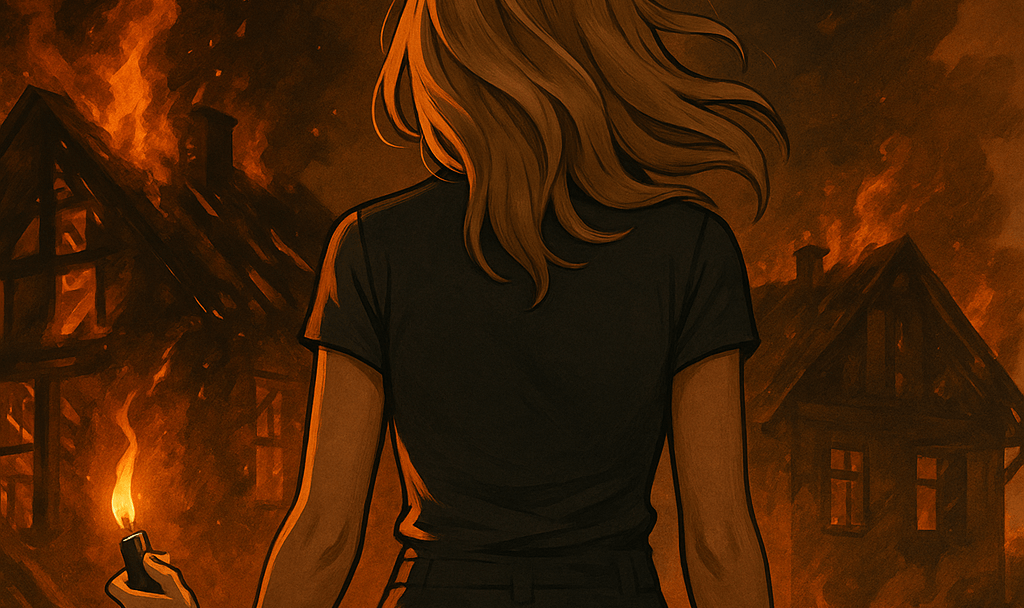
They say daughters date their fathers. I used to think I was the exception—until hindsight handed me the receipts. I didn’t want to believe that the man who ignored me, hit me, and never once made me feel protected was the same energy I kept chasing in relationships. But when I look back—really look—I see it. Every man I chose was just another variation of him.
My father was always there. And that was supposed to mean something, right? He came home. He ate dinner. He sat in the same rooms. But it felt like I was furniture—something he had to walk around, not something he saw. He never asked about my day. He never asked who I was becoming. He never gave me a safe place to feel anything.
If I cried, I was weak. If I spoke up, I was “talking back.” If I needed something, I was a burden. And if something went wrong, it was somehow my fault—even when I wasn’t involved. I wasn’t allowed to be emotional. I wasn’t allowed to be sensitive. But I was. And instead of being nurtured, I was punished for it.
He didn’t hit my sisters. Out of the three of us—me, my twin, and my little sister—I was the only one he hit. Not just spanked. Not just yelled at. He BEAT the shit out of. Me and the dogs. That was the hierarchy in that house. I guess I was on their level. Disposable. Disobedient and trainable. Something that needed to be controlled.
And every time he did it, the message was the same: You’re the problem. You’re too loud, too quiet, too difficult to love.
No one corrected him. And nobody stopped him. Not once. No one pulled me aside and told me he was wrong. And that’s the part people don’t understand—when violence becomes expected, your body doesn’t even brace for it anymore. You just take it. And then you get up like it didn’t happen. So I believed him. I didn’t know any better. I was just a kid, doing everything I could to stay out of the line of fire. I learned how to read his footsteps, his tone, his silence. I could feel the mood in the house before anyone said a word. I adjusted my posture, my voice, my energy—just to keep things calm.
That became my training. That became my blueprint for love. So yeah, of course that became normal for me.
So when I started dating, guess what felt familiar? Men who ignored me when I needed them. Men who shut down the second things got emotional. Men who wanted me quiet, easy, predictable. Men who let me carry the weight and called it partnership. Men who punished me—emotionally, mentally, or physically—and made me believe it was my job to fix it.
Not because I liked it. Not because I couldn’t tell something was off. But because it felt like home. I already knew how to survive it. I was never given a version of love that felt safe, so I chased the kind that felt familiar. And every time, it left me more drained, more hollow, more used.
They weren’t all exactly the same. But they all held pieces of him. And every time, I stepped into the same role: the one who kept it together, tried harder, gave everything, and hoped—just once—to be chosen back.
He didn’t teach me how to be loved. He taught me how to be used. And how to survive that—and smile through it.
This is me laying it out, piece by piece. Not for pity. Not for approval. But because I’m finally ready to burn the whole fucking thing down.
My father didn’t just shape who I was. He shaped what I accepted. And I accepted a lot.
These are the men I mistook for love:
My 1st relationship was when I was 15 years old.
He punched out his truck window during an argument.
I don’t remember what we were arguing about. I just remember how fast he went from tense to violent. How the energy in the cab turned thick like humidity before a storm. How his fists tightened on the steering wheel first. How I said something—I wish I could remember what—but whatever it was, it was too much.
I remember how quiet it got right after—the way the shards clung to the frame, holding on like they didn’t believe it had happened either. I didn’t scream. Didn’t flinch. I just sat there, still in the passenger seat, hands in my lap, stomach tight.
He didn’t hit me. He’d never hit me. But something broke. And I stayed. Not because I didn’t recognize it. But because I did.
Because home was worse.
His family was the safest place I knew at that time. They cooked dinner. They hugged me. They smiled with their eyes, not just their mouths. I needed that. So I stayed with him because being near them was the only thing in my life that didn’t feel like survival. And I was willing to pay for that with silence.
Even when he exploded like that. Even when I saw what he could become.
Because back then, I didn’t have a word for what was happening. I just knew that my heart beat steady through chaos. That was normal to me. Explosions didn’t mean it was over. They meant it was Tuesday.
That was two years of my life.
And I thought that was love.
My 2nd relationship was when I was 17 years old.
He didn’t show up to my high school graduation. Neither did Mother. Or my twin.
By the time he walked in, it was over. I was already done. The ceremony had ended, and I was standing there with a diploma in my hand, wondering why the people closest to me couldn’t show up for the biggest moments of my life.
He was older. In the military. I was seventeen.
And somehow, from the very beginning, I was the one making adjustments—shrinking to fit, watching my words, rehearsing my tone, checking my clothes and my body. He shaped everything.
He had already taught me how to measure my worth against how well I could be managed. And when my body did what all women’s bodies do, he made it known I was less because of it. If I wanted to be touched or he wanted to touch me, I had to prove I was “presentable.” Because according to him, periods were disgusting.
Apparently, biology was offensive.
And I? I was supposed to be spotless and pure. And I carried that shame like it was mine.
So he made me check and I believed that if I didn’t, I wasn’t worthy of care. Every time. Quietly.
He never called it shame, but that’s what it was.
When I left for the military myself, he didn’t come with me. He decided to stay home in his dorm room. My own father didn’t either—he dropped me off at the bus station like I was leaving for a weekend trip, not a whole new life. There was no goodbye. Just silence.
Even then, I stayed in the relationship.
And then he cheated. Of course he did.
I didn’t fall apart. I didn’t scream. I had already stopped existing in that relationship long before it ended. By the time it fell apart, I was just walking through the motions.
Three years. And when it was finally over, I wasn’t angry—I was empty.
Because for three years, I gave everything I had to someone who never showed up for me. Not at graduation. Not when I left. Not when I needed him most.
Just like my dad.
Just like so many others.
My 3rd relationship was when I was 19 years old.
He didn’t yell. He didn’t hit. He just didn’t care.
He told me early on—“I don’t break up with girlfriends. I just wait for them to do it.”
He said it with a smirk. Like it was clever.
By then, I didn’t flinch at those kinds of confessions. Because I had already lived in the shadow of a man who never showed up. My father didn’t go to karate tournaments. He didn’t sit in the stands at soccer games. He missed every basketball game in high school. He didn’t attend milestones—he ignored them. So when another man stood beside me and stayed emotionally absent, it didn’t feel shocking.
It felt familiar.
We were both in the Air Force as Security Forces members. He was in law enforcement. I was in security. Two separate houses on the same base, but under one roof. And even though we wore the same uniform, I always felt like I was speaking from the basement while he stood upstairs—louder, more visible, more known. I was the quiet one. The steady one. The one who disappeared behind the scenes, again.
And in the relationship? I wasn’t a partner. I was a placeholder.
When he finally got out of the military—bitter about stop loss and everything the system took from him—he didn’t just walk away from his career. He walked away from mine, too.
I was winning awards most people never even hear about. 8th Air Force Airman of the Year, 2nd Security Forces Airman of the Year, The Chief’s Sharp Troop Award, and more. I was rising. Breaking records. Getting noticed. And he wasn’t there for any of it.
He didn’t come to a single ceremony. Didn’t stand beside me when I got promoted. Didn’t meet my friends. Didn’t show up for one squadron party, one celebration, one moment. He skipped it all—on purpose. He couldn’t stomach it. He said to me “I’m tired of hearing about the military.”
Eventually, I stopped asking him to be proud. I stopped asking him to show up. And I told myself it was fine. Because I’d been learning for years—how to celebrate myself in silence.
I didn’t realize how deep that wound went until the day I didn’t call him.
I was watching Grey’s Anatomy and waiting for a commercial break to call back—because that’s how things worked then. He called the next day, irritated. Asked why I hadn’t reached out. And I told him the truth: “I didn’t have anything to say.”
Because everything I did, everything I lived, was military. And he didn’t want to hear about any of it.
That was the turning point. Not a blowout. Just a quiet door closing in my mind.
And then came the moment that sealed it—the same man who hated the military joined the Guard with his friend. The same one who told me I was lower than scum. They made that decision together. Didn’t tell me. Didn’t include me. I was nowhere in the story. Not even a footnote.
Five years. That’s how long I stayed with someone who mirrored the silence I had known since childhood.
I wasn’t just left out. I was erased.
My 4th relationship was when I was 23 years old and I married him.
He was pacing because I wouldn’t react. That’s what set it off every time. If I stayed calm, if I didn’t flinch, if I didn’t cry or yell or break down—that’s when things got dangerous. I sat there on the couch, steady and still. He circled the room over and over, talking to himself, pulling pieces of nothing together to make some twisted case that I was the problem. He needed me to crack so he could feel justified. But I didn’t.
He grabbed a full glass off the table and threw it through the patio door. It shattered on impact—glass everywhere. Across the rug, into the corners, under the baseboard, the kind of mess you don’t really ever clean up all the way. I didn’t react. I stood up, went to the hallway closet, got the vacuum, came back, and bent down to clean. That’s what I always did. I cleaned up the mess.
I was bent over, vacuuming the shards, when I felt him behind me.
There was no sound. No warning. He grabbed me by the upper body and picked me up like I was nothing. And then he threw me down the stairs.
I didn’t fall. I didn’t stumble. I was thrown.
My back hit the edge of the top step. My ribs slammed the next. I bounced the whole way down until I hit the tile at the bottom hard. It knocked the breath out of me. I laid there for a second, dazed, trying to figure out how badly I was hurt. But then I stood. I didn’t wait. I just stood up because I wasn’t going to let him have that moment.
He came down after me. He wasn’t yelling. He wasn’t flailing. He was calm—too calm. He walked straight over, grabbed the back of my head by my hair, and slammed it into the wall. The drywall cracked. Then he did it again. And again. On the third hit, the wall gave way.
My head went through the drywall.
I remember the feeling of the drywall framing my face, the dust in the air, the silence in my ears, his fist still clenched in my hair. I remember how quiet it was right then, how still everything felt even though I could barely stand.
And I got up again.
I didn’t scream. I didn’t cry. I didn’t say anything. I turned, opened the door, and walked out.
He called me. Said all the right things. And I went back—because when you’re trained to accept crumbs, even broken glass can look like love.
It was a year and half later. I had plans that night. I’d told him for days—I was dropping off two cakes and then going out with coworkers for drinks and dinner. It wasn’t last-minute. It wasn’t vague. He knew. I had been clear.
While I was out, he called me. Said he laid out steaks for dinner. Said it like he had done something thoughtful. Like I was supposed to feel bad for not being there when he decided to be decent. He made it sound like a gift. Like I was being cruel for not accepting it.
I told him I wasn’t coming home. I reminded him, again, that I already told him my plans.
He didn’t argue. He went quiet.
When I came home that night, I had my phone in my hand. I stepped through the door, and he was right there. He punched me in the face before I could even close it behind me. My head whipped sideways. My face hit the doorframe. My mouth filled with blood.
Before I could react, he ripped the phone out of my hand and took off up the stairs.
I chased him. Not because I wanted to fight—but because that phone was the only connection I had to the outside world. It was my only safety net. I wasn’t thinking clearly, but I knew I had to get it back.
At the top of the stairs, he turned and hit me again.
That punch sent me flying. My back hit the top step. Then my tailbone. Then my ribs. I slammed down each one until I landed hard on the tile floor at the bottom.
And I got up, FAST. He barreled down the stairs. He hit me again. And I stood. He wanted me to stay down. So I made sure I would stand back up.
Again.
And again.
Because I knew what it meant to stay down. When that didn’t work, he turned to my dog. Picked him up by the neck. Started choking him. He knew the connection I had with my dog.
I ripped my dog out of his hands and ran out of the house. No hesitation. No yelling. No shoes. I didn’t look back.
I didn’t go to the police that night. I was testing the next day for my E-6. I had to get my ducks in a row inorder to leave. So I got myself on a deployment.
Because I knew he wasn’t going to let me leave if I stayed. Not through a conversation. Not with words. He wasn’t going to make it easy. He needed to win. And the only way I could get out was to leave the country.
I deployed for six months, and while I was gone, I started implementing my exit plan. There was silence for a while, but when I got back, the messages started. At first, they were about the house. Things he left. Logistics. Then they turned fast—into rage, into threats. He told me he was going to kill me and I knew what he was capable of. That I had ruined everything. That I would pay.
That’s when I called the police. Two male officers showed up. I was still in uniform.
Before I could say anything—before I could even explain why I called—one of them looked me in the eye and said, “Are you sure you want to do this? You don’t want to make him more angry.”
They hadn’t heard a word from me. They didn’t ask what happened. They didn’t ask if I felt safe. Their first move was to warn me off of pressing charges.
That’s when I told them—he was prior Army. He had PTSD. He had been hospitalized for it. I told them about the physical violence, the wall, the stairs, the dog, the texts, everything.
And only after that did they ask to see the messages.
They looked through them and told me, “It’s close to something we could act on, but not quite.” They handed me a pamphlet for a women’s shelter and said I could try to get a restraining order.
I filed the report anyway.
And later, when I went to court and stood in front of a judge in uniform with everything laid out, the judge asked me why I hadn’t made a police report sooner. I explained—I had been deployed. I filed it when I got back.
He didn’t read the messages. He didn’t look at the evidence. He just said no. He denied the restraining order on the spot. He made that decision within 30 seconds of speaking to me.
That’s when I stopped expecting the system to protect me.
I moved forward with the divorce—quietly, carefully.
And I never saw him again.
My last relationship was when I was 29 years old.
He didn’t hit me. He didn’t yell. He didn’t throw things or break me down with obvious cruelty. He told me he loved me. That he was proud of me. That I was amazing. He’d say it often—like it was a ritual. “Have I told you today how much I love you?” “I’m so proud of you, babe.” He was a cheerleader. Or at least, that’s what it looked like.
But none of it ever connected to action.
We were together for almost ten years. Ten years of being celebrated in words while carrying everything alone. He didn’t plan a single date. Not a single trip. Not a single moment. I planned everything—every move, every holiday, every milestone. When we moved, I did the paperwork. I bought the house. I handled the logistics. I managed the move. He didn’t lift a finger. Not because he physically couldn’t—because he didn’t have to.
I would win awards or land a promotion or accomplish something hard—and he’d beam with pride like it was his. Like it reflected on him. He made my accomplishments feel like ours. And when I was tired, when I was overwhelmed, when I needed help—he’d say all the right things, but I was still the one doing all the work.
He said he felt bad about not making money. That it hurt him as a man. That he felt like a failure. And I believed him. So I softened. I reassured him. I made sure he didn’t feel worse than he already did. I didn’t want to add to his shame. I adjusted. I carried more, and I made it look easy. I held his ego up and my own needs down.
That’s what it really was. Psychological warfare in soft tones. He got to feel supported, safe, and loved while I slowly disappeared under the weight of everything he wouldn’t touch. He used my empathy as cover. He weaponized his helplessness. He said all the right things, but none of them led anywhere. They were beautiful words tied to nothing.
And for a long time, I confused that for love.
Because it wasn’t angry. It wasn’t loud. It wasn’t abusive in the ways I had already survived. It was just draining. Day after day, moment after moment, year after year, of being the planner, the provider, the one who always had to be okay.
When I finally told him it was over, he didn’t believe me.
He didn’t argue. He didn’t panic. He just kept going like nothing had changed. He slept in the same bed. Took the same space. Played the same golf games. Laughed at the same jokes. And once again, I was the only one who had shifted.
For a full month, I watched him carry on like we were fine. Like the words I spoke didn’t count. Like everything I’d been carrying was invisible to him. And maybe it always had been.
One night, I walked into the room and stopped trying to explain it.
I looked at him and asked, “What’s your timeline for leaving?”
And he looked right at me and said, “Oh… you were serious about breaking up?”
That line hit me harder than any punch ever had. Not because it surprised me—but because it confirmed what I’d always known deep down: he never took me seriously. Not once. Not when I was thriving. Not when I was hurting. Not when I said I was done.
He lived in the comfort of my effort. And he mistook my silence for stability. But this time, I didn’t cry. I didn’t explain. I didn’t backtrack or soften the landing.
This was the last one. The last relationship where I held both sides and handed him the credit. The last man I let make me small so he could feel big. The last one who got my labor dressed up as love.
I didn’t leave with a scar—but I left with the lesson.
Each relationship echoed the lessons I’d internalized from my father—silence, neglect, violence, invisibility—each layer carefully taught and painfully learned.
But here’s the thing about lessons: you can unlearn them.
It took years, and it took pain, but finally, I see it clearly. This story doesn’t end with me repeating my past. It ends with me rewriting it.
Today, I refuse to shrink for comfort, refuse to carry someone else’s weight as proof of love, refuse to apologize for the space I take up. I’ve spent too long giving myself away piece by piece to people who never valued the gift.
So I choose differently now. I choose myself—with clarity, with strength, with the unshakeable understanding that I deserve more than just survival.
Turns out, they were right—I did date my father.
But I’ll never be his daughter again.


 Mirror Of Chaos
Leave a comment