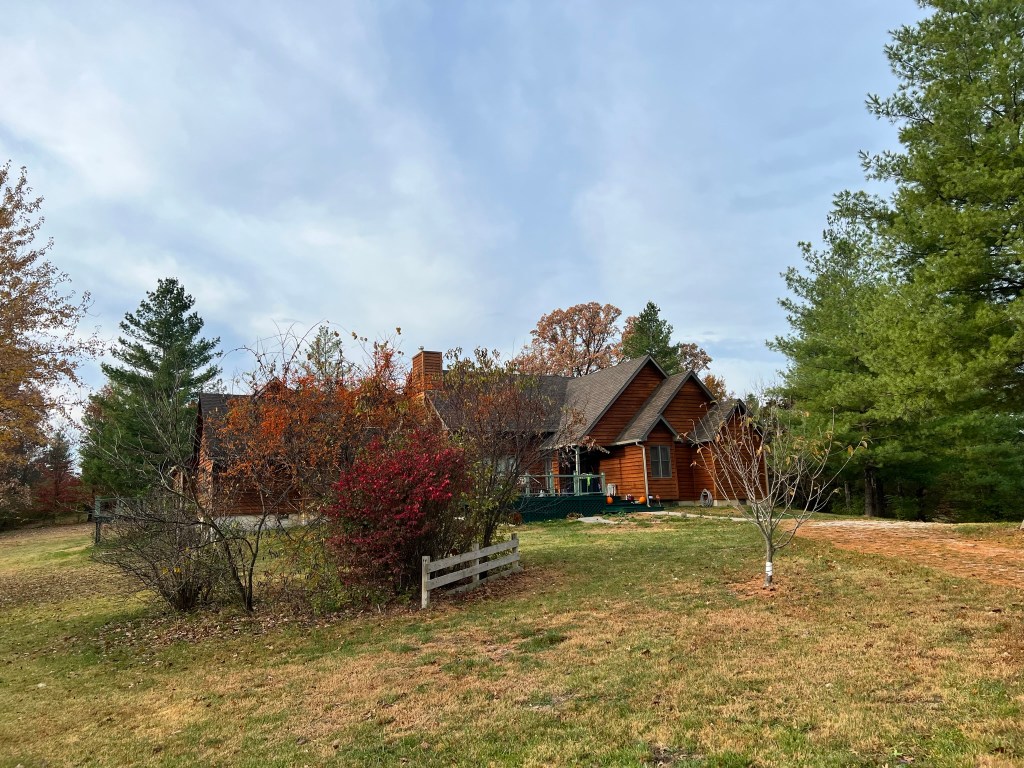
Out on ten acres of untamed land, bordered by forest on one side and a lake catching the last light on the other, stood a cedar cabin—a place carved out not just of dreams but of grit, survival, and a defiance that had never once surrendered. The life lived to reach this sanctuary hadn’t been easy. The path was worn from years of walking through other people’s shadows, from learning how to see through their masks, from enduring a world that demanded everything but offered little in return.
That voice—the one that had whispered this isn’t all there is since childhood—had been there through every step. It had whispered in the branches of a treehouse, urging a truth no one else wanted to hear. It had kept her steady when the world twisted her intentions, bent her needs, and turned her heart into something it could control. That voice became a lifeline, a fierce inner pull that helped her see through the games played by a mother who could smile like she cared but treated love like a tool—one designed to keep others guessing, grasping, and always falling short.
Growing up in that house, love was a currency only given in exchange for compliance. There were rules, unspoken but as solid as stone, rules that required shrinking, bending, always giving until there was nothing left. She was taught to silence her own needs, to blend into the walls, to read between the lines of every word and gesture, to sense the moment things could go wrong and brace for it. She became an expert in survival, a silent guardian of her own spirit, holding on to her truth when everything else demanded that she surrender it.
As an adult, she had slowly begun building a relationship with her mother’s sister, who had seemed like someone different, someone who might understand the weight of the family dynamics she carried. Over twenty-five years, they’d grown close enough that, when she moved to another state, she invited her aunt to join her, hoping that perhaps here, away from the tangled past, there could be healing. But as the months passed, she began to see something she had never anticipated. The very same patterns she had tried so hard to leave behind—the subtle control, the need for compliance, the silent resentment when things didn’t go her way—surfaced in her aunt, mirroring her mother in ways she hadn’t expected.
It was a shock. Her aunt, who she’d believed to be different, became a reflection of the same control, the same manipulation, the same draining patterns. They were the same, bound by a shared need to command others’ attention and devotion, leaving her feeling unseen and exhausted. What she had once thought unique to her mother turned out to be a family curse that ran deeper than she’d realized.
But she kept listening to that voice, that inner truth that always reminded her there was more. Little by little, she began to break away—first from family, then from an eight-year relationship that drained her from the inside out, keeping her bound to the same patterns she was so desperate to escape. And finally, that voice led her here: to this cabin, to this land, to a space that answered only to her own heartbeat, to her own breath. The dream of a cabin in the woods, once a distant fantasy, had finally become a reality, a place where her life could breathe and stretch into something real. It was, finally, hers.
But peace only reaches those who want it. And she quickly saw that for some, bitterness was easier to live with than change. Day by day, that old resentment crept in, and the quiet of the land turned into another battleground. For the aunt, seeing someone else rise from the same ashes, from the same broken pieces, was unbearable. Watching someone claim freedom and grow into their own skin brought out a bitterness that couldn’t be concealed. Every time she offered a glimpse of what healing could look like, every time she handed over a piece of advice, she was met with disdain, with defensiveness, with accusations thinly veiled as comments.
Here, in this place meant for new beginnings, she found herself facing the same fight she had left behind. There was no room for truth, no space for growth—only the familiar cycle of resentment, need, and demands that ate away at the quiet she had worked so hard to create. She could see herself, the life she had fought for, reflected back in every snide remark, every sideways comment, every chore left unfinished and every expectation left to land squarely on her shoulders.
And in this place that had cost so much to reach, that was too high a price.
Over time, she’d come to a truth she wished she had learned sooner: people go to therapy for a reason. Therapy is that safe place where, for an hour each week, people can unpack their trauma, dig through the weight they’ve carried, and leave with a little more clarity. Therapy’s important—it offers ideas, insights, someone to listen and help process the storm. But what no one tells you is that real healing doesn’t just happen there. True healing happens in the place where you exist the most, in the environment where you live every day.
For a lot of her life, the safe space had been as small as a closet. An actual closet in her childhood bedroom became her retreat from the world outside, the only place she could breathe without feeling like she was under siege. Moving into this cabin, she’d hoped the whole house could become her sanctuary. But it hadn’t been—only her bedroom had, a small refuge she clung to, carrying the weight of her aunt’s presence and the patterns she brought with her. But soon, she knew, that weight would lift. Her aunt was moving out, and with that, every room in the house would finally be hers, fully, completely. The entire home would become what it was meant to be—her safe space. And she knew, with that freedom, there would be so many possibilities, room to breathe in ways she hadn’t yet imagined.
And honestly? She felt damn proud. Proud of every step it had taken to get here, proud of the boundaries she’d learned to draw, proud of herself for claiming a life that was fully, wholly, hers.
She finally understood: there was nothing left to save. She had climbed out of the same darkness, but she couldn’t force anyone else to do the same. She couldn’t hand over peace to someone determined to refuse it. This was her sanctuary, her life, her peace, and it wasn’t built to house those who chose to stay bitter, who turned others’ growth into a threat. The cabin wasn’t a place for anyone who couldn’t see the beauty in what she’d built.
When the decision came to end it, it wasn’t loud or angry. There was no need. The line was drawn as clear as stone: This is my space, and if you can’t respect it, it’s time to go. And as each box left the cabin, every burden lifted. She let go of the responsibility, the resentment, the cycles that had once kept her bound. Each moment of silence felt like a reclamation—a return to the life she’d fought tooth and nail to create.
Watching the car pull away, leaving a trail of dust down the gravel road, there was no regret, no second-guessing. Only stillness—the kind that settles deep, in the bones, in the mind, like a promise fulfilled. This wasn’t just an escape; it was the breaking of a curse that had tied her to patterns not of her own making. She had finally let go of the life that demanded she stay small, that required her to be anything but herself.
Standing there, on the land she had claimed, with the lake rippling under the last light of day, she felt the fullness of everything she’d built, everything she had become. No more ghosts, no more guilt, no more making space for anyone unwilling to do the work of healing. This was hers now—every inch, every moment, every breath of this life that was built on her terms.And in the quiet, she let that truth settle, a final release from everything that had once held her back: This peace is mine. This life, this power, is mine. And no one will ever take it from me again.

 Mirror Of Chaos
Leave a comment